
Daily Top 5
Why the Northern Arizona economy is gaining altitude
Article originally posted on AZ Big Media on September 28, 2026
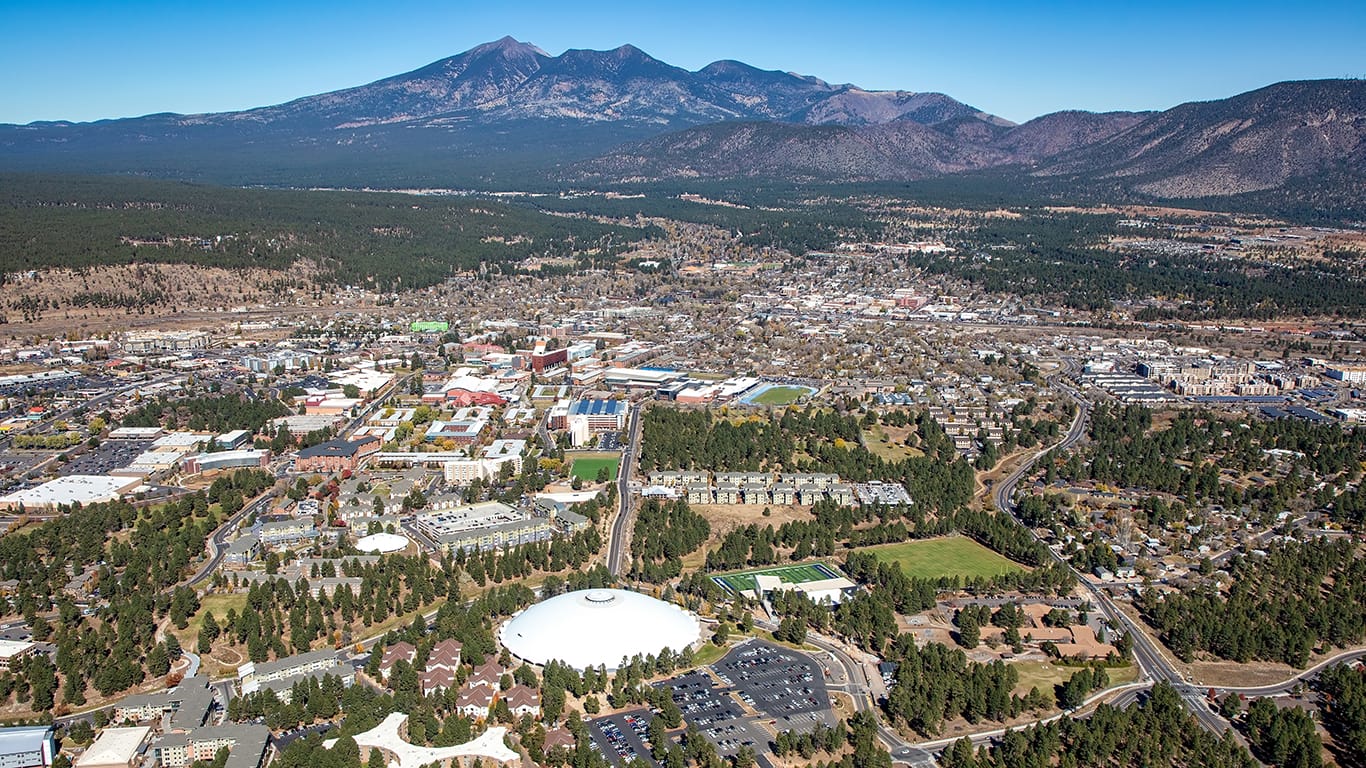
Northern Arizona — a region that prides itself on its abundant natural beauty — is moving away from being solely defined as a tourist destination thanks to the emergence of new industries and a concerted effort to nurture sectors that have already taken root there.
Beyond the breathtaking views, an abundance of outdoor adventures and small-town charm, the region has all the components needed for economic expansion. Available land and proximity to key transportation networks, for example, make it an enticing place for those looking to build.
These assets, along with a spirit of camaraderie shared between the area’s cities and towns, make Northern Arizona fertile ground for future growth. Here’s how four municipalities are capitalizing on this opportunity and ensuring they’ll be ready when the next one crops up.
Prescott
About 100 miles north of Phoenix, the home of Arizona’s first rodeo has blossomed into a strong commercial hub. Currently, the city has 370,000 square feet of retail space awaiting tenants and 18,000 active housing permits. In pursuit of updating its ecosystem, Prescott is moving to expand investment in public safety, aviation and aerospace, advanced manufacturing, healthcare, technology and higher education.
“Those are areas of focus for us, as is ensuring growth is sustainable and makes sense for the city,” says Tricia Lewis, Prescott’s economic development manager. “Sectors like advanced manufacturing or technology can be long-term employment drivers.”
To support the economic development of the city, Prescott focuses on business retention and expansion. Since stepping into this role, Lewis has launched a “concierge program” — which acts as a liaison to businesses trying to get their foot in the door.
“Let’s say [a company is] having issues with entitlement or getting their permits through the city, they can call the economic development department,” Lewis says. “[We] help them get across the finish line, so they can receive their certificate of occupancy and move forward.”
With aviation and aerospace being a focus of the city’s development, the industry is supported by one of the nation’s top 50-busiest airports, which is looking to incorporate additional airline services. Prescott is also home to the prestigous Embry-Riddle Aeronautical University, which cut the ribbon on its Strategic Academic Flight Education (SAFE) Complex in March. The two-story 20,000-square-foot flight operations building includes a 263,000-square-foot aircraft ramp and space to perform maintenance on two Cessna aircrafts.
“We’re lucky to have that big of a caliber of school in this small town,” Lewis says. “They’ve been here a long time and they’re well invested in this community.”
Kingman
Mountains with trails spreading for miles encapsulate Kingman’s picturesque views, but its location offers more than scenery. It sits along a key transportation corridor: the I-40 and future Canada-to-Mexico connecting I-11. Currently, a $43.9-million interchange project is wrapping up Phase I, which will connect the I-40 to the Kingman Airport and Industrial Park through new four-lane roadway, aiming to alleviate traffic congestion.
Leveraging its accessibility, Kingman hosts the largest industrial park outside of Maricopa County, giving the city an advantage in manufacturing capacity. The park’s tenants include distribution, aviation and manufacturing companies, such as Pepsi Cola, Goodyear Tire & Rubber Co. and American Woodmark Corporation — the park’s largest employer.
This large industrial park awaits a Phase II expansion, delayed by pending FAA land release of 790-acres. Phase II is designed for the “modern industry” and will enhance Kingman’s accessibility through direct rail and interstate connections.
But with a boom of new residents — Kingman’s population has grown by nearly 28% since 2010 — city officals aren’t focused solely on industrial facilities. More people and jobs means demand for more retail options has surged, and the city is trying to catch up.
“Everything’s a process,” says Terri Curtis, Kingman’s economic development project manager. “We’ve been busier than we ever have and [the department’s] job is to facilitate that movement.”
Increasing the municipalty’s quality of life is a high priority, so plans have been made to expand medical services at Kingman Regional Medical Center — the city’s hospital and largest employer.
“We love doing things that are going to help our community grow and grow in the right way,” Curtis says.
Sedona
Red rock landscapes, spiritual wellness, spas and boutiques are among the wide range of experiences Sedona has to offer to travelers from around the world. The city thrives off of its tourism industry, but businesses aren’t the only ones to benefit. Visitors pay an estimated 77% of total general sales and transaction privilege tax (TPT) revenue, which recirculates into the economy through funding construction and transit systems.
“Sedona In Motion,” is a series of transportation investments funded by the half-cent TPT, with 60% of collected revenue going toward these improvements. One project that opened in May 2025 included the construction of a two-lane roadway connecting the end of Forest Road to a new intersection on State Route 89A. The bypass gives Uptown Sedona residents the ability to avoid congestion and provides additional access for emergency services.
“Connectivity is so important when you talk about getting through the center of Sedona,” says David Key, president and CEO for the Sedona Chamber of Commerce & Tourism Bureau. “Traffic is a concern for many [residents], and the Forest Road bypass is such an ambitious infrastructure improvement.”
More cars on the road means more places to park are needed, and the Uptown Parking Garage projects hopes to meet that demand. Located off Forest Road, the three-story garage adds around 270 parking spaces, along with EV chargers, a police substation and shuttle stop.
“The sooner we can alleviate some of those challenges, we’re able to boost our retention with both residents and businesses,” Key says. “And we increase quality of life for residents and businesses.”
Flagstaff
At 12,633 feet above sea level, Humphreys Peak overlooks Northern Arizona’s economic juggernaut — Flagstaff. The city is home one of the state’s public universities and is a popular destination for Arizonans wanting to escape the Valley’s scorching summers or enjoy the falling snow. Over the decades, local leaders have made a concerted effort to grow its industrial might, attracting major companies such as W.L. Gore & Associates, which specializes in implantable medical devices.
Healthcare is one of the sectors the city expects to expand, with Flagstaff’s Economic Development Administrator Creag Znetko noting the indjust is projected to grow 10-15% over the next decade as the population ages.
When it comes to bringing in manufacturers, Znetko and his team work to attract organizations that are sustainable and beneficial to residents.
“That’s what we’re targeting,” Znetko continues. “Advanced manufacturers that are what what we call ‘low impact, high wage.’ We want the autonomous ones that don’t use a lot of water, but will pay that higher wage.”
Having a site where companies can locate in is crucial, and Northern Arizona Technology Park is one development hoping to meet that demand. Sitting on a 31-acre lot with access to utilities and fiber, the project will offer space for startups and established businesses looking to expand operations.
While attracting new industries and investing in long-time operators is important for economic development, the city is also finding ways to make life better for its residents. For example, Flagstaff’s 20,938-square-foot Downtown Connection Center is part of a broader effort to improve road safety and expand public transportation along the “Downtown Mile” corridor.
The $28 million, all-electric facility was built using mass timber construction techniques — the first project to do so in the region and the second in the state. Phase II will create 13 bus bays and further its sustainability goals with the addition of photovoltaics and electric charging. As its name suggests, the Downtown Connection Center is embedded in Flagstaff’s historic downtown district alongside public art installations, murals and a growing culinary scene.
“Our downtown has definitely increased its overall business and revenue,” Znetko adds.
The infrastructure investments, business attraction efforts and quality of life improvements being made across Northern Arizona’s municipalities are proof that economic development in the region can be done with an environmentally friendly way that enriches local residents and businesses.
“Arizona will keeping growing — we just need to ensure that it’s quality growth,” Znetko concludes.